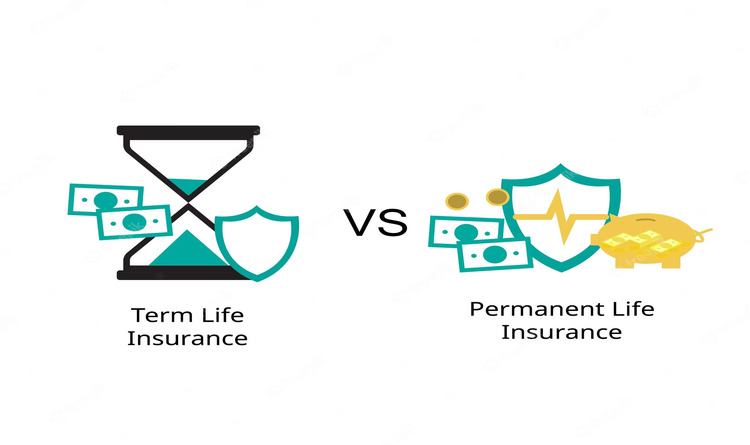
Whole life insurance and term life insurance are often presented as two very different paths toward financial security. One emphasizes lifelong protection and steady accumulation through a built-in savings component. The other focuses on low-cost, temporary coverage that frees up cash to invest elsewhere. When the goal is long-term wealth building, understanding how each structure works—and how they compare over decades—is essential.
At a high level, whole life insurance builds wealth through its cash value component, while term life paired with separate investing often outperforms over the long run due to lower costs and higher potential returns. The choice is not merely about insurance coverage; it is about how efficiently your dollars compound over time.
Key Differences Between Term and Whole Life
Term life insurance provides affordable, temporary coverage, typically for 10 to 30 years. If the insured dies during the term, beneficiaries receive the death benefit. If not, the policy expires—statistically, in roughly 99% of cases, term policies end without paying out a claim. There is no cash value accumulation, no investment component, and no refund of premiums. It is pure insurance.
Whole life insurance, by contrast, offers lifelong coverage as long as premiums are paid. A portion of each premium funds the death benefit, while another portion builds cash value inside the policy. This cash value grows over time and may earn dividends if issued by a mutual insurer. The result is a hybrid product: part insurance, part conservative savings vehicle.
The cost difference is significant. For example, a healthy 40-year-old male might pay around $400 per year for a $500,000 term policy, while a comparable whole life policy could cost approximately $5,500 per year. That dramatic gap—often nearly an eightfold difference—drives much of the long-term wealth debate.
Wealth-Building Mechanisms
Whole life insurance builds wealth primarily through its cash value component. The cash value grows on a tax-deferred basis, typically averaging between 1% and 3.5% annually on a guaranteed basis, though total internal returns can range from 1% to 6% when dividends are included. Policyholders can borrow against the accumulated cash value at relatively low interest rates, and loans are generally tax-free as long as the policy remains in force.
This structure appeals to those seeking stability and predictability. The growth is not subject to market volatility, and the policy provides guaranteed minimum returns. In retirement, policy loans can supplement income without triggering taxable events, offering a degree of flexibility in tax planning.
Term life insurance, however, does not build cash value at all. Instead, its wealth-building power lies in what it does not consume: capital. Because premiums are so much lower, policyholders can invest the difference elsewhere—a strategy often summarized as “buy term and invest the difference.”
If that difference—potentially thousands of dollars annually—is invested in diversified assets such as equities, historical long-term returns of 7% to 10% compound annual growth (CAGR) become possible. Over decades, that compounding can significantly outpace the more modest internal returns of a whole life policy.
Long-Term Performance Comparison
Over a 20-year horizon, the difference in outcomes can be substantial. Whole life policies typically experience slower growth in the early years because of front-loaded fees and commissions. Cash value accumulation often lags behind total premiums paid during the first several years.
In contrast, investing the premium savings from a term policy into broad stock market indices—such as the S&P 500—has historically delivered around 7.26% CAGR over long periods. While past performance does not guarantee future results, equity markets have consistently outpaced the conservative returns embedded within whole life policies.
For example, if an individual saves $5,100 per year—the approximate difference between $5,500 (whole life) and $400 (term)—and invests that amount at a 7% annual return over 20 years, the portfolio could grow to well over $200,000. At 9% annual growth, the figure rises significantly higher. Meanwhile, whole life cash value at a blended 4–6% internal rate of return may accumulate more slowly, particularly after accounting for early policy expenses.
That said, whole life proponents argue that guarantees matter most during market downturns. Cash value does not decline with stock market volatility, and dividends from well-capitalized mutual insurers may continue even during recessions. For conservative savers, this predictability can provide psychological and financial stability.
Critics counter that average investors often underperform market benchmarks due to poor timing and emotional decision-making. Ironically, the disciplined structure of whole life—where growth is steady and less visible—can prevent panic selling. In that sense, the “behavior gap” becomes part of the comparison.
Liquidity and Flexibility
Liquidity differs substantially between the two approaches. Term life provides no liquidity—there is no cash value to borrow against or withdraw. If financial needs change, the policy offers only its death benefit protection.
Whole life, by contrast, allows policyholders to take loans against their cash value. These loans are typically available at competitive interest rates and can be used for investments, emergencies, or retirement income. Because loans are not taxable distributions (provided the policy remains active), they can offer tax-efficient access to capital.
However, policy loans reduce the death benefit if not repaid and can jeopardize the policy if mismanaged. Liquidity exists, but it is not costless.
Estate Planning and Stability
Whole life insurance often shines in estate planning contexts. Individuals with large estates may use permanent life insurance to provide liquidity for estate taxes or to equalize inheritances among heirs. The guaranteed death benefit ensures funds are available whenever death occurs, not just within a limited term.
Term life is better suited for temporary needs: income replacement while children are young, coverage during mortgage years, or protection until retirement savings accumulate. Once financial independence is achieved, the need for insurance may diminish entirely.
For younger individuals who are healthy and comfortable with market risk, term life combined with disciplined investing can maximize long-term wealth accumulation. The math favors higher expected returns when costs are minimized and compounding works over decades.
For those seeking conservative growth, guaranteed coverage for life, and estate planning certainty, whole life provides a structured, stable solution. It is less about maximizing returns and more about reducing uncertainty.
The Infinite Banking Concept
Some advocates promote whole life within strategies like “infinite banking,” where policyholders use cash value loans to finance purchases and investments while continuing to earn dividends on the full cash value. In theory, this creates a self-financing system.
In practice, outcomes depend heavily on policy design, dividend performance, and disciplined repayment. It can work effectively in certain cases, but it is not a shortcut to wealth. Costs and complexity remain higher than simple term-and-invest approaches.
Recommendation Factors
Choosing between term and whole life depends on several variables:
- Age and health
- Risk tolerance
- Investment discipline
- Need for permanent coverage
- Estate planning goals
- Tax considerations
If you are young, healthy, and able to invest aggressively, term life combined with diversified investing often provides the greatest long-term wealth-building potential. Lower premiums free capital for higher-return opportunities, and compounding over decades becomes the primary driver of financial growth.
If you require permanent coverage—for estate tax liquidity, lifelong dependent support, or guaranteed legacy planning—whole life can serve as a stable cornerstone. Its conservative growth, tax-deferred accumulation, and access to loans may complement a broader financial strategy.
Final Perspective
Neither policy type guarantees wealth on its own. Whole life offers stability, guarantees, and structured growth. Term life offers flexibility, low costs, and the opportunity to pursue higher returns elsewhere. Ultimately, discipline matters more than the product itself.
An investor who buys term but fails to invest the difference will likely underperform. Conversely, someone who buys whole life expecting stock-like returns will be disappointed. Both tools can serve a purpose when aligned with clear financial goals.
Consulting a fee-only financial advisor—one not compensated by product commissions—can help clarify which path fits your objectives. Insurance should support your financial plan, not substitute for it. Over the long run, the combination of appropriate coverage, consistent investing, and disciplined behavior remains the true engine of wealth creation.