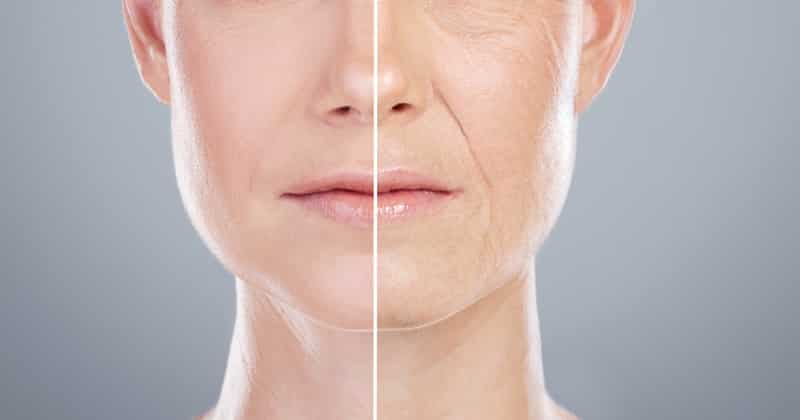
Science has made significant advances in skin aging research, but marketing noise has grown just as fast. Among trending ingredients and bold longevity claims, strong clinical evidence consistently points to two foundational pillars: broad-spectrum sunscreen and topical retinoids. Together, they can prevent up to 80–90% of visible skin aging caused by UV exposure while significantly stimulating collagen production. Beyond that foundation, emerging therapies such as topical rapamycin and NAD+ precursors show promise — though long-term human data is still developing.
Here’s what truly works, what’s experimental, and how to build an evidence-based anti-aging strategy.
Broad-Spectrum Sunscreen (SPF 30+): The Most Important Intervention
If you had to choose only one anti-aging product, sunscreen would be it. UVA and UVB radiation are responsible for up to 90% of collagen degradation, leading to wrinkles, pigmentation, texture changes, and loss of elasticity.
A 4.5-year randomized controlled Australian trial showed that daily sunscreen use reduced visible signs of aging by 24% compared to the control group. In other words, sunscreen is not only cancer prevention — it is the most powerful anti-photoaging tool available.
Best practices:
- Use SPF 30 or higher.
- Ensure broad-spectrum (UVA + UVB) protection.
- Apply daily, even on cloudy days.
- Reapply every 2–3 hours with sun exposure.
- Zinc oxide or titanium dioxide formulas are excellent for daily wear due to stability and low irritation risk.
Estimated cost: $10–30/month
Downtime: None
Topical Retinoids (Retinol & Tretinoin): The Gold Standard for Skin Renewal
Retinoids are vitamin A derivatives backed by decades of clinical data. They work by:
- Increasing collagen synthesis
- Reducing collagen breakdown
- Accelerating cell turnover
- Improving skin tone and texture
Meta-analyses show 20–50% reductions in fine lines within 3–6 months, with collagen production increases ranging from 20% to as high as 80%, depending on concentration and duration.
Key differences:
- Prescription tretinoin (0.025–0.1%): More potent, faster results.
- Over-the-counter retinol: Milder, better tolerated for beginners.
Common early side effects: redness, dryness, mild peeling.
Recommendation: Start 2–3 nights per week and gradually increase.
Estimated cost: $20–100/month
Adjustment period: 2–6 weeks
Emerging Therapy: Topical Rapamycin
Rapamycin, traditionally used as an immunomodulatory drug, has recently gained attention in aging research.
A small 2019 randomized controlled trial found that a 10μM rapamycin cream reduced the senescence marker p16INK4A by approximately 50% (p=0.008) after 6–8 months of use. It also increased collagen VII and improved wrinkles and skin tone, with no significant systemic absorption observed.
Why this matters:
It directly targets cellular senescence — one of the fundamental drivers of aging.
Limitations:
- Small study size
- Limited long-term data
- Requires medical supervision
Systemic Longevity Candidates: NAD+ Precursors & Metformin
Some compounds aim to support aging at the cellular and metabolic level.
NAD+ Precursors (NMN, NR)
NAD+ is critical for cellular energy production and DNA repair. Levels decline with age. Supplements such as NMN and NR have shown increases in cellular NAD+ and improvements in metabolic markers in small studies. However, robust clinical evidence for visible skin anti-aging remains limited.
Metformin
Widely used for type 2 diabetes, metformin is being studied for longevity-related benefits due to its metabolic effects. Direct dermatologic benefits remain under investigation.
Senolytics: Clearing Senescent Cells
Senolytics are compounds designed to eliminate senescent cells that secrete inflammatory factors and degrade tissue structure.
Combinations like dasatinib + quercetin have shown improvements in skin elasticity in pilot studies. PRP-related variants have demonstrated up to 34% increases in collagen density in certain small trials.
This area remains experimental.
Procedural Dermatology Options
Microneedling & PRP
Stimulate collagen production through controlled micro-injury.
- Collagen density increase: ~34%
- Cost: $300–800 per session
- Downtime: 1–3 days
Lasers & Radiofrequency (RF)
Induce deeper collagen remodeling.
- Cost: $500–3000 per session
- Downtime: 3–7 days
These procedures can enhance results but do not replace daily sunscreen and retinoids.
Lifestyle Anchors: The Non-Negotiables
No topical product can compensate for poor lifestyle habits. Strong evidence supports:
- 7–9 hours of sleep for cellular repair
- Regular exercise for circulation and oxygenation
- Avoiding smoking to prevent accelerated collagen breakdown
- Antioxidant-rich nutrition to reduce oxidative stress
These factors amplify every topical or procedural intervention.
What to Avoid
The anti-aging market is saturated with peptides and “breakthrough” ingredients lacking randomized controlled trials. If high-quality human RCT data doesn’t exist, skepticism is warranted.
Rule of thumb:
Prioritize high-evidence interventions before experimenting with emerging trends.
Evidence Summary
| Treatment | Evidence Level | Key Result | Cost / Downtime |
|---|---|---|---|
| Sunscreen | High (RCTs) | 24% less aging vs control | $10–30/month / None |
| Retinoids | High (Meta-analyses) | Up to 80% ↑ collagen | $20–100/month / Mild irritation |
| Topical Rapamycin | Small RCT | ↓ p16 by 50%, ↑ collagen VII | Prescription / None |
| Microneedling/PRP | Moderate | 34% ↑ collagen density | $300–800 / 1–3 days |
| Lasers/RF | Moderate–High | Deep collagen remodeling | $500–3000 / 3–7 days |